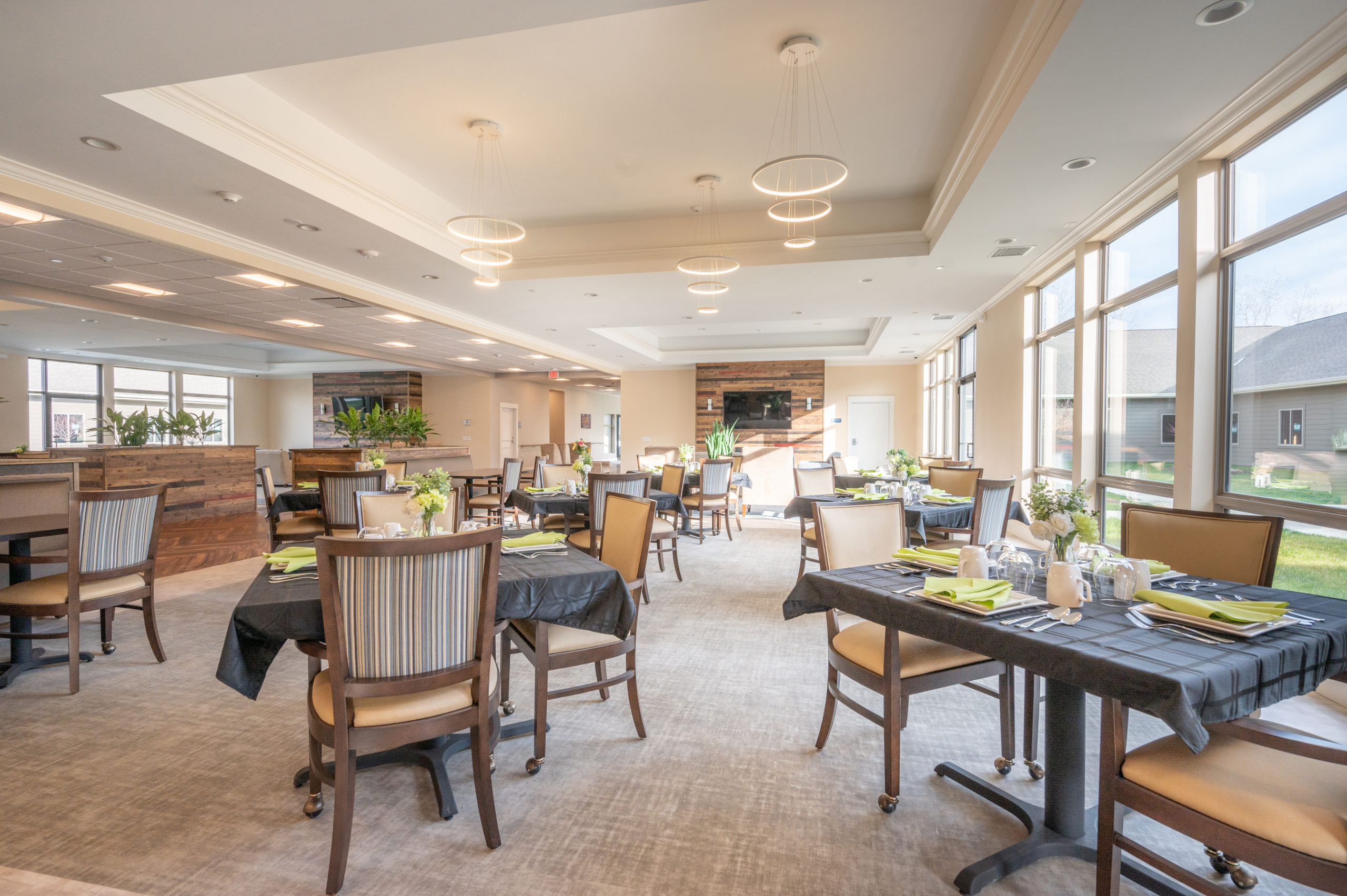
Senior living communities have to balance two priorities that can sometimes appear to compete with each other: controlling operating costs and creating comfortable, welcoming environments for residents. The right building strategy shows that these goals can support each other.
Sustainable building materials, efficient building envelopes, high performance HVAC systems, natural lighting, durable finishes, and smart energy controls can reduce the resources required to operate a community without making the environment feel institutional or uncomfortable.
Senior living communities operate for long hours and often require continuous heating, cooling, ventilation, lighting, hot water, and other building services. That makes energy performance particularly important.
A community that loses conditioned air through poorly insulated walls, inefficient windows, or air leakage may require more mechanical energy to maintain comfortable indoor temperatures. Over time, those expenses can become a significant part of operating costs.
Sustainable design takes a broader view. Instead of focusing only on the initial construction price, developers can consider:
• Energy consumption over the building’s life
• Maintenance and replacement requirements
• Material durability
• Indoor air quality
• Thermal comfort
• Water consumption
• Lighting performance
• HVAC efficiency
• Long term operational expenses
Sustainable building materials can contribute to energy performance, durability, indoor environmental quality, and resource efficiency. Material selection should begin with the specific requirements of the community and its climate rather than simply choosing products because they are marketed as green.
Useful considerations include:
• Thermal insulation performance
• Recycled or renewable content
• Local availability
• Expected service life
• Maintenance requirements
• Moisture resistance
• Low VOC emissions
• Recyclability
• Manufacturing impacts
• Compatibility with the building envelope
The building envelope includes the roof, walls, windows, doors, insulation, and other components separating interior spaces from outdoor conditions. For senior living, envelope performance matters because residents may be particularly sensitive to temperature changes. Research on senior housing has emphasized the relationship between energy efficiency and thermal comfort, including the importance of building envelope performance for older adults.
A well designed envelope can help:
• Reduce heat gain during hot weather
• Reduce heat loss during cold weather
• Minimize drafts
• Stabilize interior temperatures
• Reduce HVAC demand
• Improve resident comfort
• Protect mechanical equipment from excessive demand
Energy efficiency should never come at the expense of resident comfort. Older adults can have different thermal comfort needs than younger occupants, making temperature management especially important in senior living environments. Recent research has highlighted that comfort involves more than temperature alone. Visual conditions, acoustics, air quality, humidity, and the ability to control the environment can also influence how residents experience a space.
A comfortable building is therefore not simply one with powerful HVAC equipment. It is one designed so that HVAC systems do not have to work harder than necessary.
Heating and cooling systems are among the most important energy consuming systems in many senior living communities. High efficiency HVAC equipment can reduce energy consumption, but equipment selection should be considered alongside the building envelope, ventilation strategy, zoning, controls, and occupancy patterns.
Modern systems can be paired with:
• High efficiency heat pumps
• Variable speed equipment
• Energy recovery ventilation
• Smart thermostatic controls
• Occupancy sensors
• Zoned temperature management
• Building automation systems
• Efficient air distribution
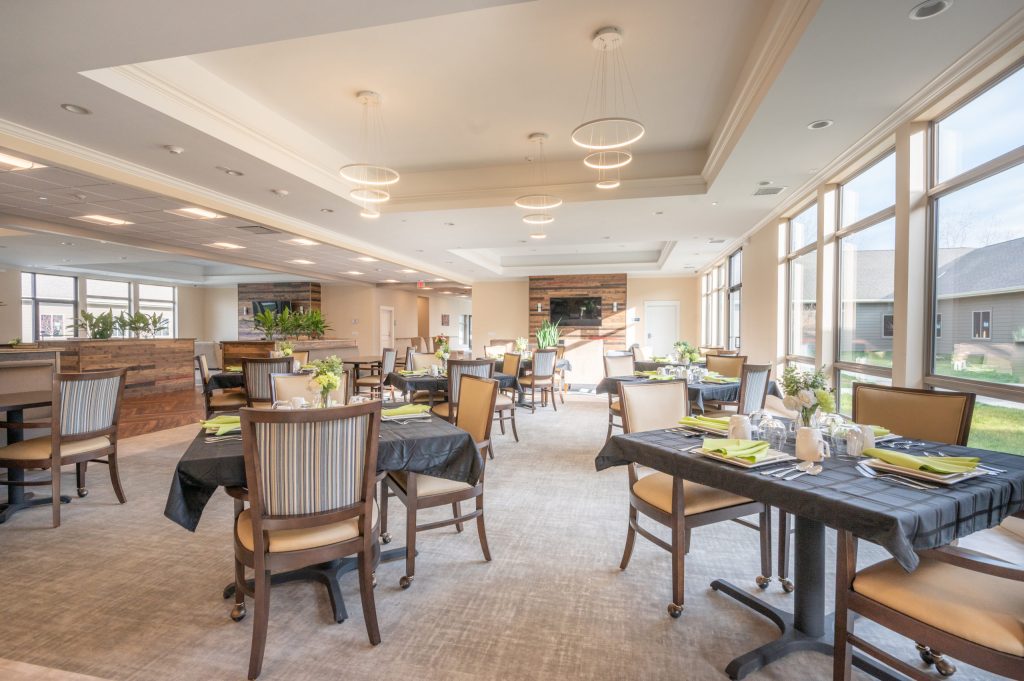
Natural daylight can support a more residential atmosphere while reducing reliance on artificial lighting during daylight hours. Large windows, appropriately positioned glazing, skylights where practical, reflective interior surfaces, and open common spaces can help distribute daylight deeper into a building.
Lighting design should also consider older adults. Good visibility, reduced glare, consistent illumination, and easy wayfinding can contribute to a safer and more comfortable environment. Energy efficient LED lighting can further reduce electricity consumption and maintenance requirements. Occupancy sensors and daylight controls can prevent lights from operating unnecessarily in spaces that are empty or already adequately illuminated.
These strategies align closely with the broader principles of modern senior living design, where comfort, functionality, wellness, and residential character are increasingly important.
Sustainability should not be viewed only through the lens of energy consumption. The materials used inside a senior living community can influence indoor environmental quality. Low VOC paints, adhesives, sealants, flooring products, cabinetry, and furnishings can help reduce exposure to unwanted chemical emissions.
Ventilation is equally important. Energy efficient ventilation systems should still provide appropriate fresh air while avoiding unnecessary energy loss. Energy recovery systems can help transfer energy between outgoing and incoming air streams, improving efficiency without simply reducing ventilation. This creates an important balance between energy conservation and healthy indoor environments.
Energy is only one part of operating expenses. Water efficient fixtures, efficient irrigation, rainwater management, leak detection, and appropriately designed landscaping can reduce water consumption and associated operating costs.
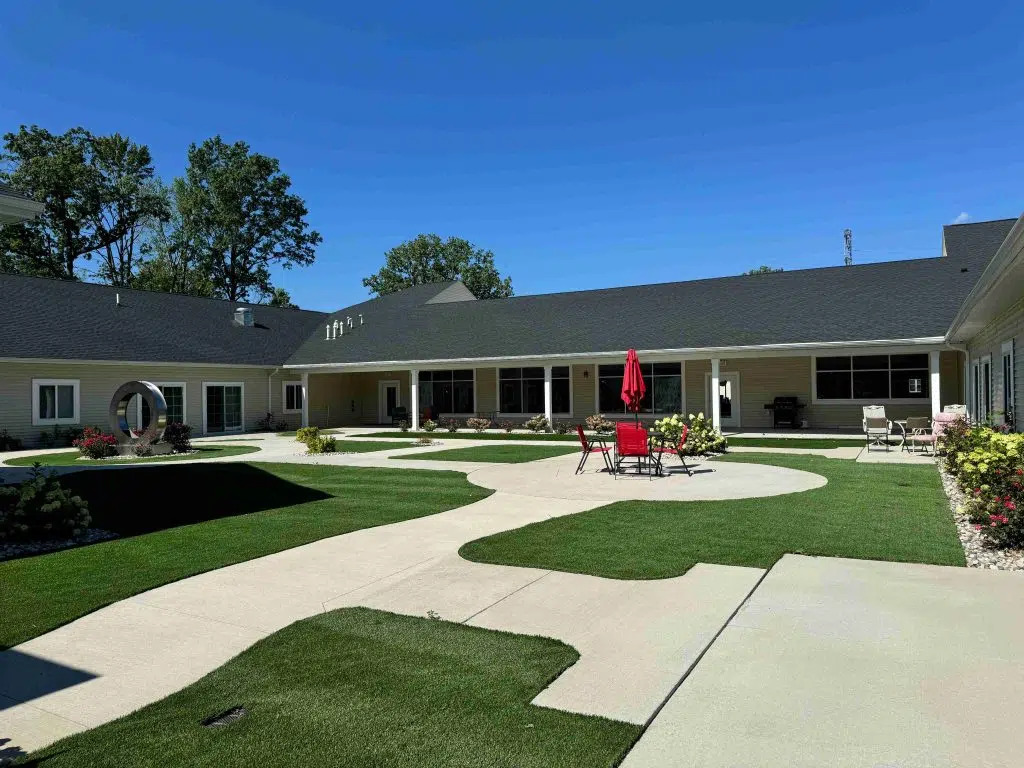
Senior living communities can benefit from selecting native or climate appropriate landscaping that requires less irrigation while still creating attractive outdoor environments.
Water efficient design also supports broader sustainability objectives by reducing the resources required to supply, heat, move, and treat water.
The most sustainable material is not necessarily the newest material. In many cases, durability is one of the most important sustainability characteristics. A product that lasts longer can reduce material consumption, labor requirements, waste, and replacement expenses.
For senior living developers, durability should be evaluated in relation to actual operating conditions. High traffic corridors, dining spaces, resident bathrooms, kitchens, outdoor areas, and common rooms can experience substantially different levels of wear. Material selection should therefore reflect how each space will actually be used.
This approach can support the broader purpose built philosophy discussed in Build Senior Living’s content about designing communities specifically for older adults rather than adapting buildings that were never designed for senior living.
Initial construction cost is only one part of the financial picture. A more complete evaluation considers what a building will cost to operate and maintain over many years.
For example, a higher performance insulation system may require additional investment during construction but reduce heating and cooling demand for decades. Similarly, durable exterior materials may cost more initially while reducing maintenance and replacement requirements. Life cycle cost analysis can help developers compare these tradeoffs systematically.
Important factors include:
• Initial material cost
• Installation cost
• Energy savings
• Maintenance expenses
• Replacement frequency
• Expected service life
• Utility prices
• Equipment efficiency
• Future renovation requirements
Energy efficiency should be considered alongside adaptability. Technology, resident expectations, energy costs, building codes, and environmental conditions will continue to change. Communities designed with flexible infrastructure can be easier to upgrade without major disruption.
Future ready strategies may include:
• Accessible mechanical systems
• Smart building infrastructure
• EV readiness
• Solar ready roofs
• Flexible electrical capacity
• Efficient plumbing systems
• Adaptable common areas
• Durable exterior assemblies
• Building performance monitoring
Sustainable development does not mean adding every available green technology to a project. The strongest approach is usually more deliberate. Start with the building’s location, climate, resident needs, operating model, and long term objectives. Then identify the strategies that provide measurable benefits.
For Build Senior Living, this philosophy fits naturally with purpose built development. Modern senior living design increasingly brings together operational efficiency, resident comfort, wellness, accessibility, and long term functionality rather than treating them as separate objectives.
Sustainable building materials and energy efficient systems can do more than reduce environmental impact. They can create buildings that are easier to operate, more durable, more comfortable, and better prepared for the future.
For senior living developers, the opportunity is particularly meaningful. A thoughtfully designed community can reduce unnecessary energy and maintenance expenses while providing residents with comfortable temperatures, good lighting, healthy indoor air, attractive spaces, and a welcoming residential atmosphere.
The objective is not to make senior living feel less comfortable in the name of sustainability. It is to use smarter design so that comfort requires fewer resources.
Building a successful senior living community requires decisions that connect design, construction, operations, resident experience, and long term performance. Build Senior Living brings these considerations together through purpose built senior living development focused on quality, functionality, community needs, and long term value.